

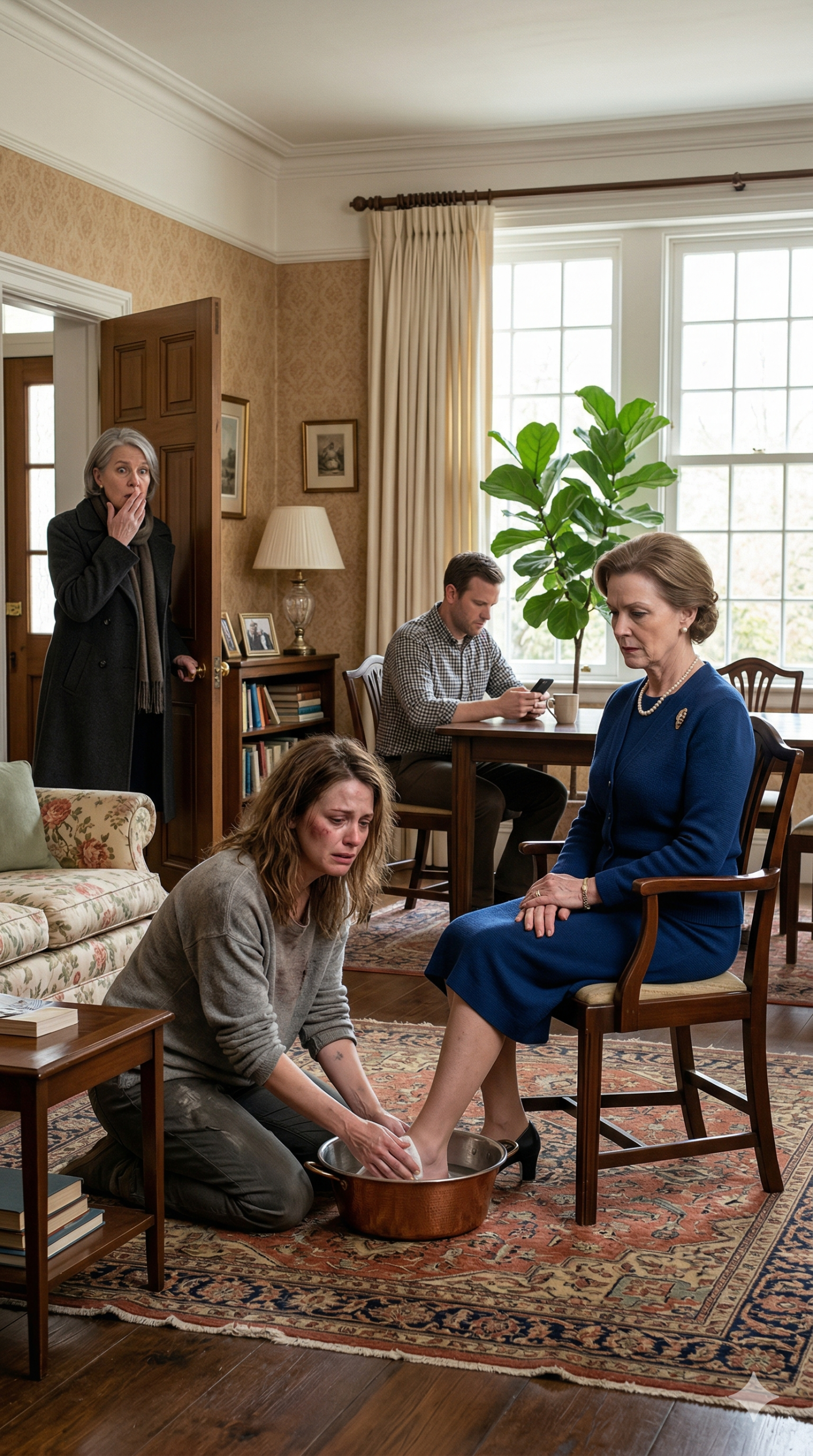
I went to visit my daughter, Emily, when she was eight months pregnant, expecting to see her resting comfortably, smiling the way first-time mothers should. Instead, I stood frozen in the doorway of her in-laws’ pristine suburban home in Columbus, Ohio, my overnight bag still hanging from my shoulder. Emily was barefoot on the hardwood floor, her face pale and exhausted, carrying a heavy tray of iced tea into the dining room while her husband, Ryan, sat laughing with his parents as though everything were perfectly normal.
For a moment, I thought I had the wrong house.
Emily had always been confident, disciplined, and self-assured. She was the type who color-coded her college notes, ran half-marathons, and never allowed anyone to diminish her. But the woman I saw that day moved quickly and quietly, shoulders slightly hunched, as if trying not to be noticed. When she saw me, her eyes widened—not with joy, but with fear.
“Mom, you’re early,” she said, forcing a smile.
I looked at the tray shaking in her hands, then at the stack of dishes waiting in the kitchen. “Emily,” I asked carefully, “what are you doing?”
Before she could respond, her mother-in-law, Patricia, appeared with a polished smile that didn’t touch her eyes. “She insists on helping,” she said smoothly. “A little nesting before the baby arrives is perfectly natural.”
Ryan didn’t move. He didn’t even look uncomfortable. He just nodded casually. “Hey, Carol. Long drive?”
Long drive? That was all he had to say while his eight-months-pregnant wife served his family like hired help?
Emily stepped closer to me, lowering her voice. “Mom, please… don’t say anything.” Her hand rested on her belly, trembling. That’s when I saw it—the bruise. Faded yellow and purple, just above her wrist where her sleeve had slipped.
My chest tightened. “Emily,” I whispered, gently taking her arm, “what happened?”
She yanked her sleeve down instantly. “I bumped into the pantry door.”
Patricia’s smile sharpened. “She’s been clumsy lately.”
I turned to Ryan, waiting—hoping—for some kind of reaction. But he just kept scrolling on his phone.
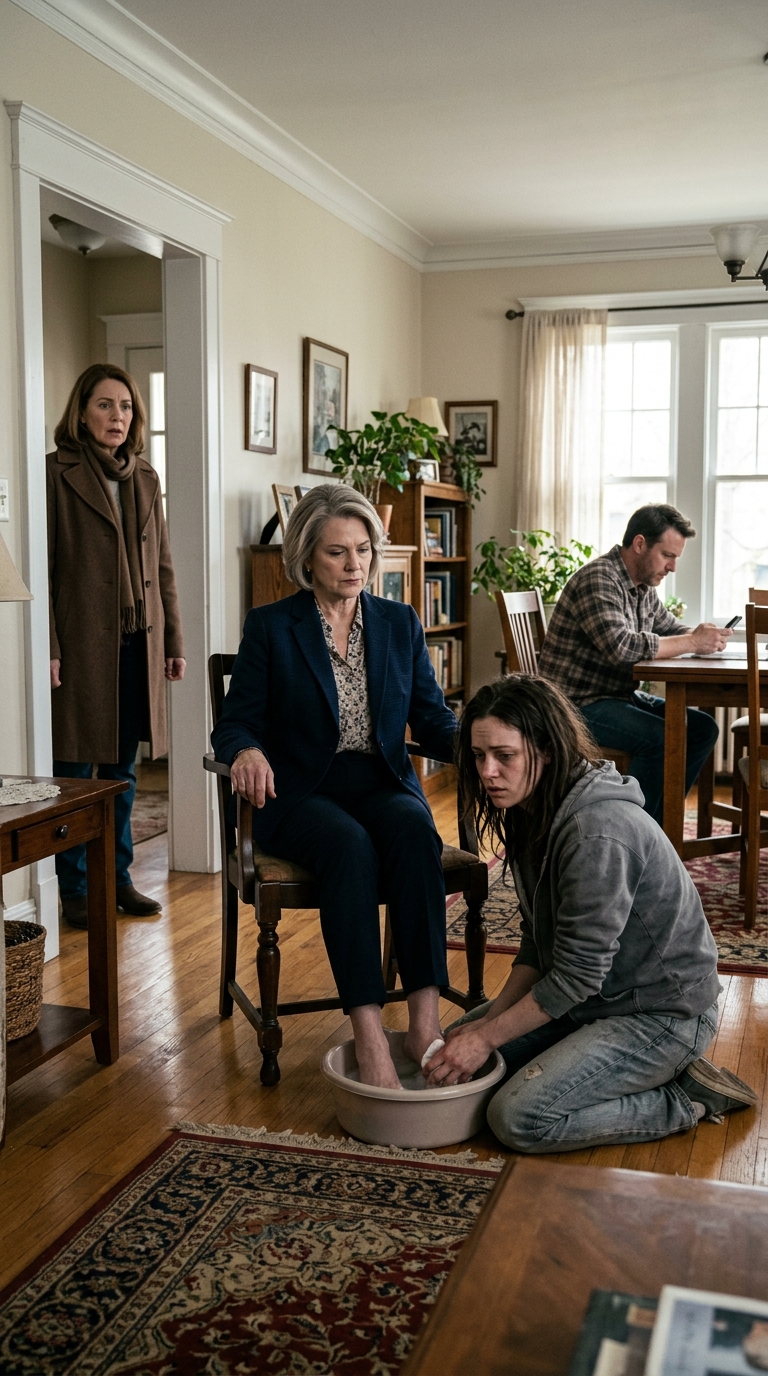
That’s when I knew this wasn’t stress. This wasn’t normal family tension. Something was deeply wrong in that house.
A few minutes later, I followed Emily into the kitchen. She leaned close, tears filling her eyes. “Mom… if I tell you the truth, you have to promise not to leave me here tonight.”
The air in the kitchen felt suffocating.
I set my purse down and faced her fully. “I’m not going anywhere,” I said quietly. “Not without you.”
For a brief second, I saw my daughter again—the one I knew. Relieved. Almost safe. But then footsteps echoed from the dining room, and she stiffened instantly, lowering her gaze and grabbing a dish towel as if nothing had happened. That reaction told me everything.
After dinner, Patricia insisted Emily clean up while the men went to watch television. I stayed in the kitchen on purpose, drying dishes that were already dry, waiting. Emily stayed silent until Patricia finally went upstairs to take a call.
Then the truth spilled out—broken, rushed, barely held together.
It started when Emily and Ryan moved into his parents’ house six weeks earlier. Their lease had ended, and Ryan convinced her it would be “financially smarter” to stay with his family until after the baby arrived. Patricia promised support.
But once Emily moved in, the rules began.
No naps during the day—“lazy mothers raise lazy children.”
No takeout—“a wife should cook.”
No friends visiting—“outsiders bring trouble.”
Ryan kept her car keys because she was “too emotional” to drive. Her phone had to stay downstairs at night because Patricia said screens were harmful for the baby.
I felt physically sick hearing it.
“Why didn’t you tell me?” I asked.
Emily stared down at the sink, even though the dishes were already clean. “Because every time I said I wasn’t happy, Ryan told me it was just hormones. Then Patricia would cry and say I was destroying the family. After a while… I stopped trusting myself.”
That was the moment something inside me cracked. This wasn’t just exhaustion. My daughter had been conditioned to doubt her own mind.
“And the bruise?” I asked softly.
Emily hesitated. “Three days ago, I told Ryan I wanted to stay with you before the baby comes. He grabbed my arm in the pantry so hard I slammed into the shelf. He said if I embarrassed him again in front of his parents, I’d regret it.”
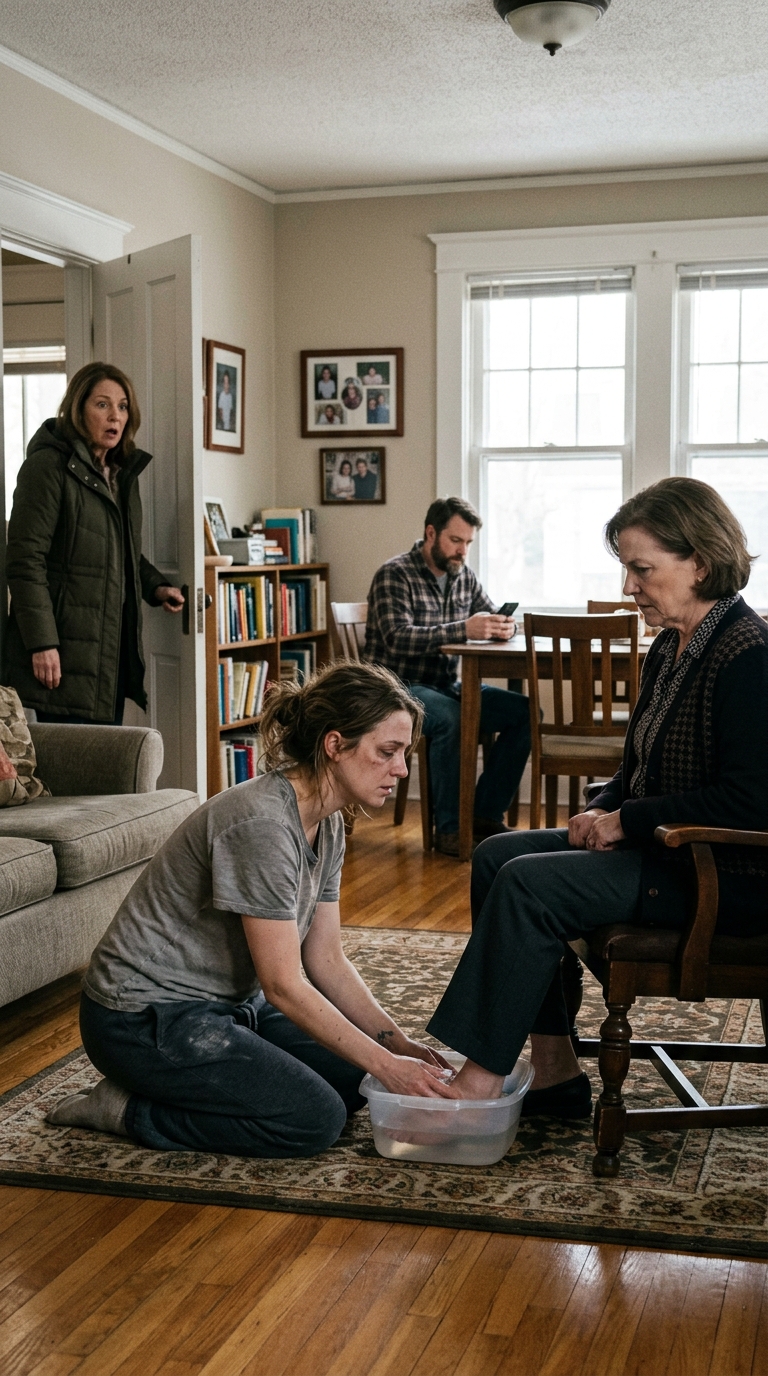
My chest tightened. “Has he hurt you anywhere else?”
“No… not like that. But he blocks the door when we argue. He takes my phone. He says if I leave, he’ll tell everyone I’m unstable and try to take the baby.”
I held her hands firmly. “Listen to me. None of this is normal. And none of this is your fault. He doesn’t get to scare you into staying.”
Tears slid down her face. “I don’t know how to get out.”
I did.
I told her to pack only what mattered—her ID, insurance card, charger, medication, and baby papers. I texted my neighbor, Diane, a retired family lawyer, asking her to be ready. Then I called my husband, Mark, and told him to come immediately with the spare car seat and bags.
In twenty minutes, we had a plan.
But just as Emily zipped her suitcase, Ryan appeared in the doorway. His eyes moved from the bag to me, his tone turning cold.
“Where do you think you’re taking my wife?”
He shut the bedroom door behind him. The click made my stomach tighten. Emily stood beside the bed, one hand under her belly, breathing fast. I stepped closer to her.
“She’s coming home with me,” I said.
Ryan let out a short laugh, empty of humor. “Emily isn’t going anywhere. She needs stability, not one of your dramatic rescues.”
Before I could respond, Emily spoke.
“No,” she said, her voice shaking but steady. “I’m leaving.”
Ryan turned to her, his charm gone. “You’re confused. Your mother always puts ideas in your head.”
Her hands trembled, but she didn’t look away. “You took my phone. You grabbed my arm. You let your mother treat me like I’m a servant. I’m done.”
A moment later, Patricia rushed in, drawn by the noise. “What is going on?” she snapped. Then she saw the suitcase and clutched her chest. “Emily, after everything we’ve done for you?”
I had spent years choosing politeness over conflict. But there are moments when staying polite becomes the real betrayal.
“This ends tonight,” I said. “You isolated her, controlled her, and made her believe she had no choice.”
Patricia’s expression hardened. Ryan stepped forward. “You have no proof.”
Emily slowly rolled up her sleeve.
The bruise had darkened.
For the first time, neither of them spoke.
Then we heard it—the sound of Mark’s truck pulling into the driveway. A car door slammed. Another knock followed—Diane, who had come herself after my message.
I will never forget Ryan’s face when he realized we were not alone, and we were not bluffing.
Diane stepped inside, calm and firm, introducing herself clearly. In front of everyone, she told Emily she had every right to leave, to seek protection, and to document everything—the bruise, the threats, the control. Suddenly, the house that had made my daughter feel small no longer felt so powerful.
Emily picked up her bag.
Ryan made one last attempt. “If you walk out that door, don’t expect to come back.”
Emily met his eyes, tears still on her face—but strength there now too. “That,” she said, “is the first honest thing you’ve said in weeks.”
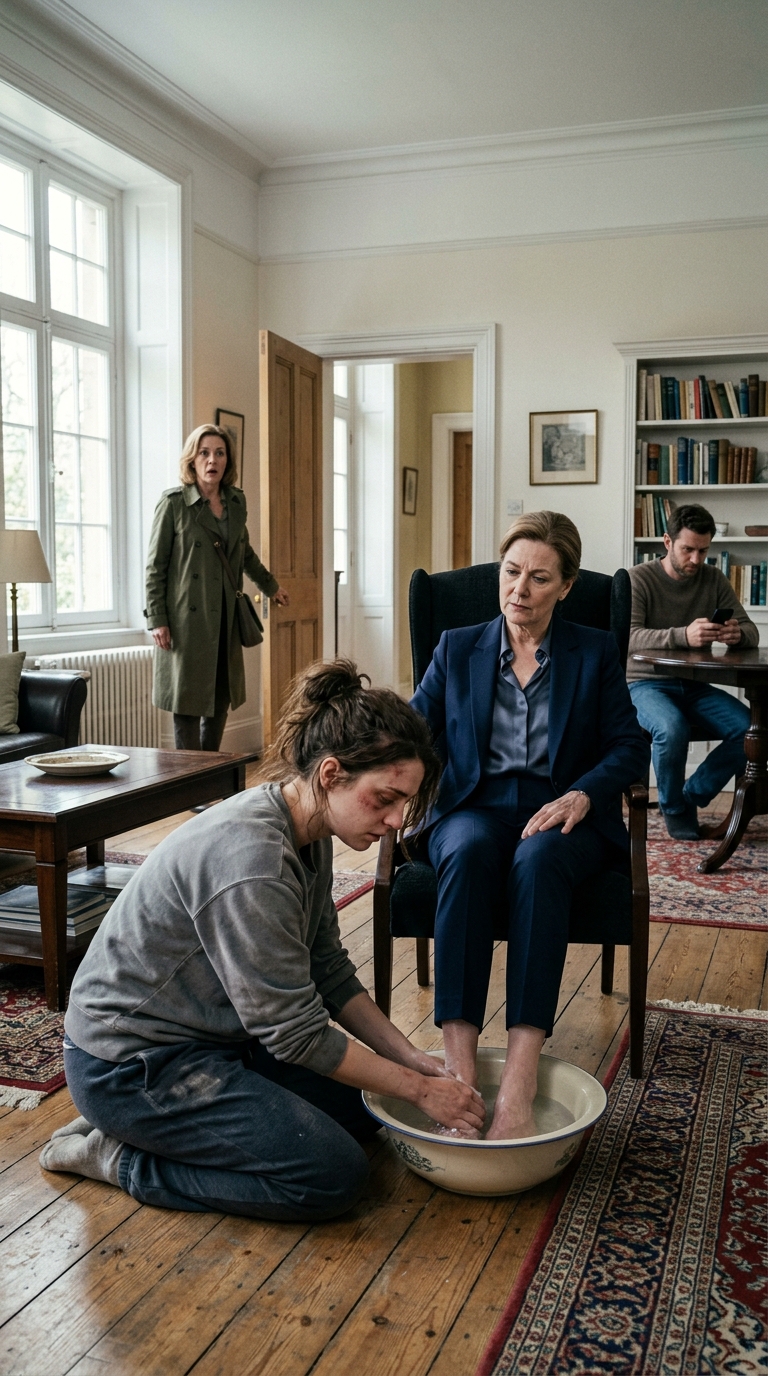
We walked out together.
Two weeks later, Emily was home with us, sleeping in the nursery I had prepared—soft yellow curtains, a rocking chair by the window. Her doctor said the baby was healthy. Diane helped her begin the legal process and secure temporary protection. Ryan’s family told their version of the story, of course. People like that always do. But truth has a way of holding its ground once it’s spoken.
A month later, Emily gave birth to a little girl—Lily.
When I held my granddaughter for the first time, I looked at my daughter and saw something I hadn’t seen in weeks—color in her face, steadiness in her hands, and a quiet peace returning to her eyes. She was still healing. Still afraid sometimes. Still learning to trust herself again.
But she was free.
And sometimes freedom doesn’t start with a courtroom or a speech.
Sometimes, it begins with someone noticing the bruise no one was supposed to see.
If this story stayed with you, remember this: control doesn’t always begin with violence. Sometimes it starts with isolation, silence, and being told you’re overreacting. If you’ve ever seen signs like that in someone you love, trust yourself and speak up. And if this story moved you, share your thoughts—because one voice, one moment of attention, can change everything.
