

In the quiet village of Saint-Geniès, tucked away in the heart of southern France, fear didn’t always arrive with shouting or obvious threats. Sometimes, it came in three black sedans with tinted windows, crisp shirts, predatory smiles, and legal papers that smelled far more like extortion than justice.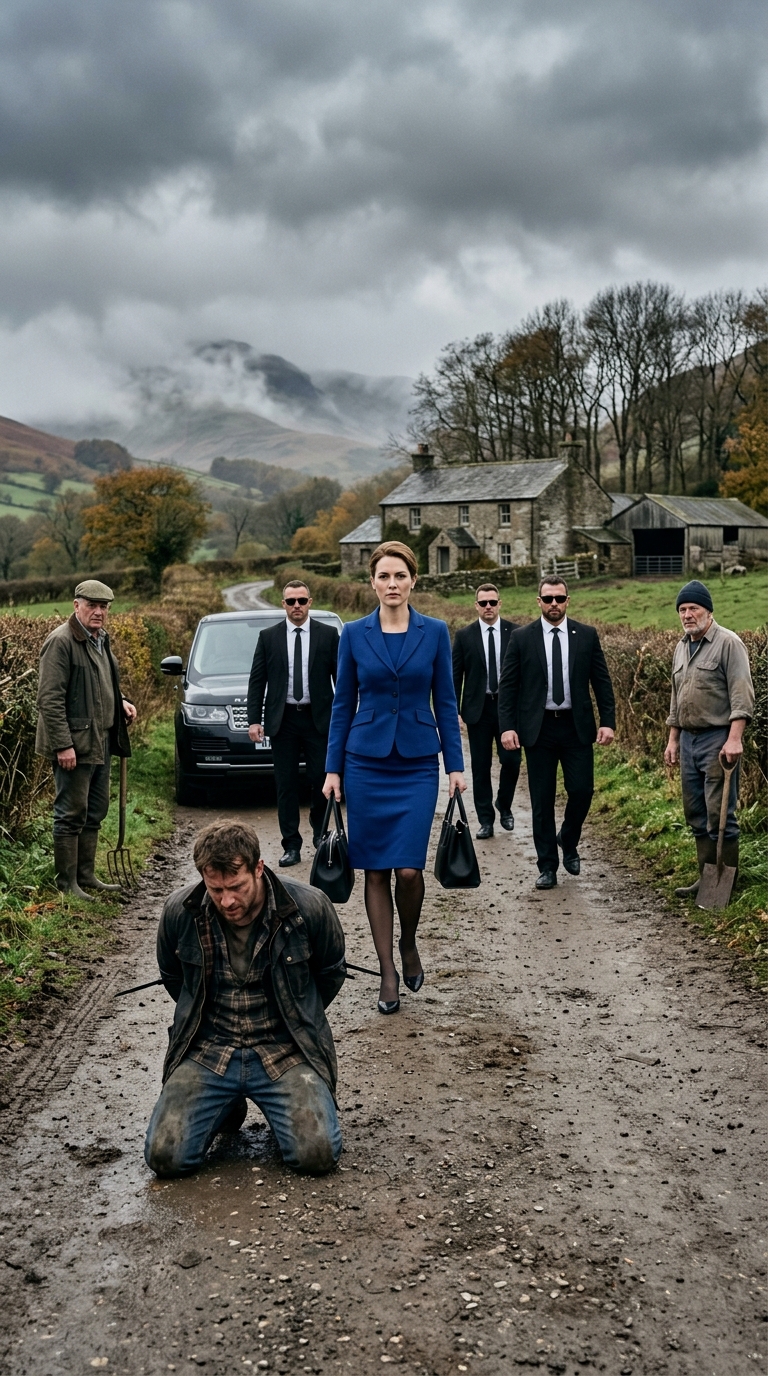
Marcel, an 82-year-old man, understood that the moment he saw dust rising along the dirt road leading to his land.
He sat on his stone bench in front of his Provençal farmhouse, just as he had every day for the past 40 years, hands resting on knees worn by labor, his gaze stretching across his 15 hectares of olive trees and vineyards. These were not just plots of land. They were his life’s work. Furrows carved by his own hands. Ancient trees he had protected through every frost. Sacred soil where he had scattered his wife’s ashes ten years earlier. The same land where he had raised his only daughter with more sacrifice than words. When the three vehicles came to an abrupt stop in front of the house, the peaceful silence of dawn shattered instantly.
Out stepped the village mayor, Thierry Rousseau, accompanied by two municipal deputies, four enforcers with folded arms, and three neighbors who once greeted Marcel with respect but now avoided his eyes.
— We’ve come to talk, Marcel, the mayor said smoothly, in that soft tone of someone who has already decided to crush you before speaking.
The old man barely lifted his head, his pale eyes fixed on them.
— I’m here.
One of the deputies stepped forward and handed over a thick folder containing twenty pages of contracts.
— This is an exceptional offer from the municipality. Your land must be included in a new eco-responsible hotel development. It’s for the future of the village.
Marcel didn’t even move to take the papers.
— My land is not for sale.
The mayor’s artificial smile froze, replaced by a cold sneer.
— Think carefully, Marcel. It would be unfortunate if the prefecture ordered an expropriation for public interest.
— I’ve already thought about it.
One of the neighbors, Jacques, emboldened by the group’s presence, stepped forward.
— Don’t be foolish, Marcel! What are you going to do alone with 15 hectares at your age? You’re 82, for heaven’s sake!
The old man slowly turned toward him with the calm only possessed by those who have lived too much to be intimidated by greed.
— I intend to die on it if I must.
That sentence ignited everything. The fake politeness vanished. The four enforcers formed a circle around him. The negotiation was over. One of them shoved the stack of papers against Marcel’s chest. Another grabbed his arm violently, forcing him off the bench. He staggered—but didn’t fall. Not yet.
— You’re signing now, old man, one of them spat inches from his face. Before our patience runs out.
— Let go of me, Marcel said, tired but unyielding.
They didn’t.
With cowardly force, they shoved him to the ground. His fragile knees struck the gravel hard. Dust rose around him as they pinned him down. The mayor stood watching, hands in his pockets, as if this were just routine paperwork.
The three neighbors stood at a distance, frozen in cowardice. No one intervened.
Marcel took a deep breath. His body burned with pain. But what hurt more was the betrayal of those he had watched grow up.
Then he lifted his chin slightly, eyes fixed on the dirt road, and said with quiet certainty:
— My daughter is on her way.
Crude laughter echoed.
— Your daughter? the mayor mocked, stepping closer. Little Chloé who left fifteen years ago with a broken suitcase? And what’s she going to do? Lecture us with her Paris degrees?
Marcel said nothing. He kept looking beyond them.
And then everything shifted.
Fifty meters away, a figure appeared at the end of the road. A woman walked steadily through the dust, dressed in a sharply tailored black suit, flanked by two imposing men in dark suits with earpieces. She didn’t run. She didn’t shout. She showed no panic.
She radiated absolute authority.
As she approached and her dark eyes scanned the scene—her 82-year-old father on his knees, contracts scattered, men surrounding him—the air itself seemed to freeze under the August sun.
She kept walking.
And for the first time that morning, the men who had been laughing… swallowed hard, unable to grasp the scale of the disaster heading straight toward them. No one could imagine what would happen in the next sixty seconds.
PART 2:
No one could later say exactly when the morning crossed into something unreal.
Was it when the woman stopped three meters away, her icy gaze fixed on her father on the ground?
Was it when the two men beside her positioned themselves with military precision?
Or was it when she spoke, her voice low and sharp as a blade, without hesitation:
— Let him go. Immediately.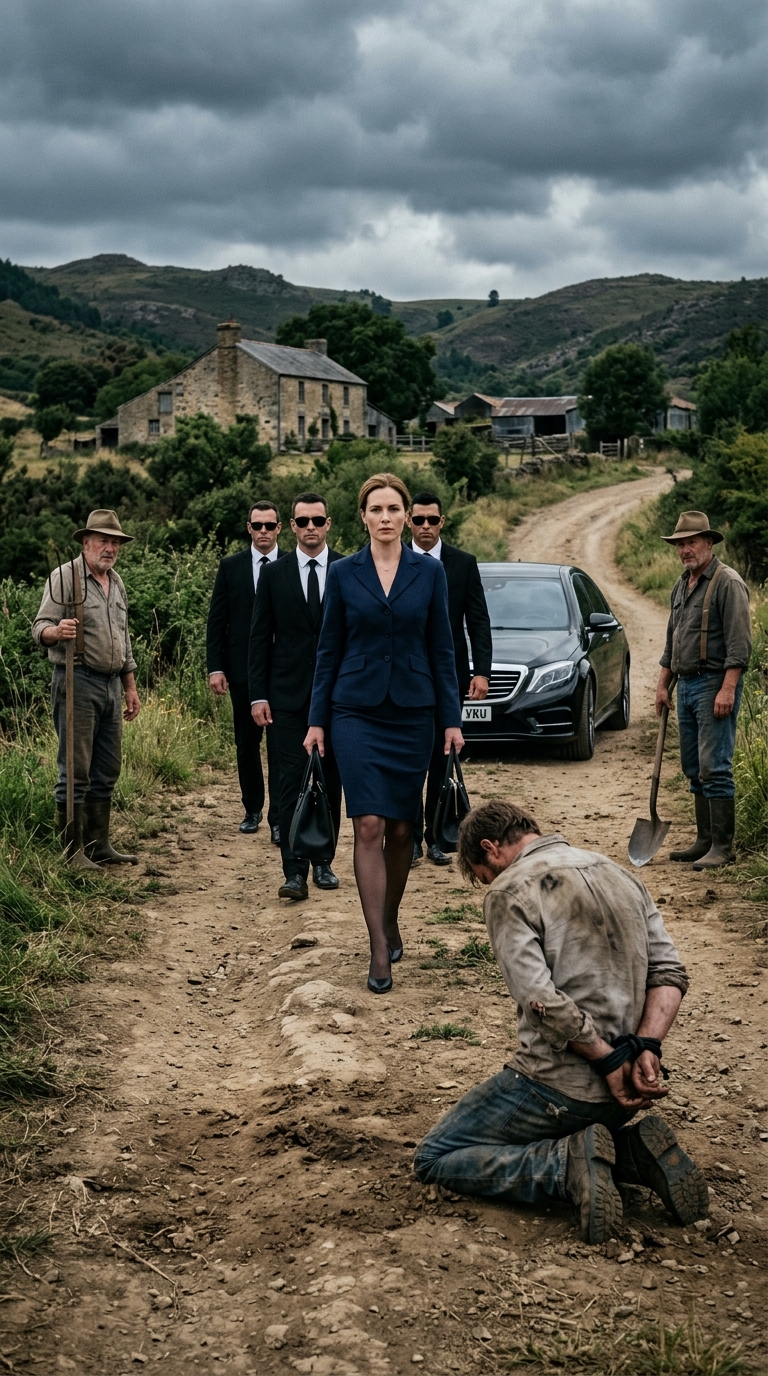
She didn’t shout. She didn’t need to. Her voice carried crushing authority.
One of the men holding Marcel tightened his grip reflexively, but the mayor felt his arrogance falter.
— And who are you to give orders in my town, madam? he demanded. This is a private matter.
She slowly turned her head toward him, looking at him not as an official—but as something insignificant.
— I am Marcel’s daughter.
The mayor laughed nervously.
— Ah, the famous Chloé! Listen, young lady, just because you succeeded in Paris doesn’t mean you can come here and take control. Your presence means nothing. These papers will be signed—willingly or not.
She stepped closer, locking eyes with him.
— My presence means your career, your freedom, and your little local tyranny end right now.
As she spoke, one of the men beside her touched his collar and murmured three words into a hidden microphone. The faint sound was enough to chill everyone present. The three neighbors began stepping back, fear replacing every trace of mockery.
Chloé lowered her gaze to her father. For the first time, her composure cracked for a fraction of a second.
— Are you hurt, Papa?
Marcel nodded gently, a faint smile on his face.
— I knew you’d arrive in time, my daughter.
She took a breath, locked her emotions back in place, and turned to the group.
— What you’ve done here is attempted extortion by force. Abuse of authority by a public official. And aggravated assault on a vulnerable 82-year-old man.
The mayor, panicking, raised his voice.
— Ridiculous accusations! You have no proof! He fell on his own! Everyone here can confirm it! Right?
He turned to the neighbors.
Chloé didn’t blink.
— I don’t need false testimony. I have direct witnesses.
She turned slowly toward them.
The words hit like a hammer. The neighbors looked at Marcel—his bloodied face, the man who had shared olives every winter, who helped rebuild the school roof decades ago. Shame consumed them.
Then a trembling voice spoke.
— I… I saw everything. They threw him down.
It was Jacques.
— Shut up, Jacques! the mayor snapped.
But it was too late.
— I saw it too. He refused to sign and they attacked him.
— They forced him to his knees.
The silence shattered.
That was what truly broke Mayor Rousseau—not her arrival, not the guards, but the moment his control over people’s silence collapsed.
Then came the sound.
Engines. Sirens.
At the end of the road appeared six armored gendarmerie vans and four unmarked vehicles. Dozens of officers poured out, surrounding the property in under thirty seconds.
A senior officer stepped forward, approached Chloé, and saluted.
— Madame Prosecutor, the perimeter is secured. Arrest warrants are confirmed. Awaiting your orders.
The mayor’s face drained of color.
— Prosecutor…?
Chloé stepped close.
— Yes, Mr. Rousseau. I am Chloé Dupont, Prosecutor at the National Financial Prosecutor’s Office, specializing in white-collar crime and real estate corruption.
The revelation hit like an earthquake.
One enforcer released Marcel instantly. Another deputy tried to hide the contract file behind his back.
Chloé remained calm.
— My office has been investigating you for 18 months. Shell companies in Luxembourg. Fraudulent permits. Bribes. I knew you needed these 15 hectares. And I knew your arrogance would push you to take them by force. You’ve just handed me a perfect case.
She gestured slightly.
— Take statements. Seize all documents. Arrest these five individuals. No one leaves.
The gendarmes moved immediately. Handcuffs clicked. The mayor was forced against his car.
— This is a scandal! he shouted. Abuse of power!
Chloé replied calmly:
— No, Rousseau. Abuse of power was coming in a pack to strip an old man of his home, believing no one would defend him.
The murmurs changed—from fear to relief.
As the men were taken away, Marcel stood up. He refused help. He dusted off his shirt, looked at his land, then at his daughter.
His eyes held only pride.
Not for her title.
Not for the police.
But for the little girl who had left with worn shoes and dreams—and returned as a woman no tyrant could ever break.
Chloé gently took his hand.
— Come on, Papa. Let’s go home. The coffee must be cold.
He nodded, eyes wet.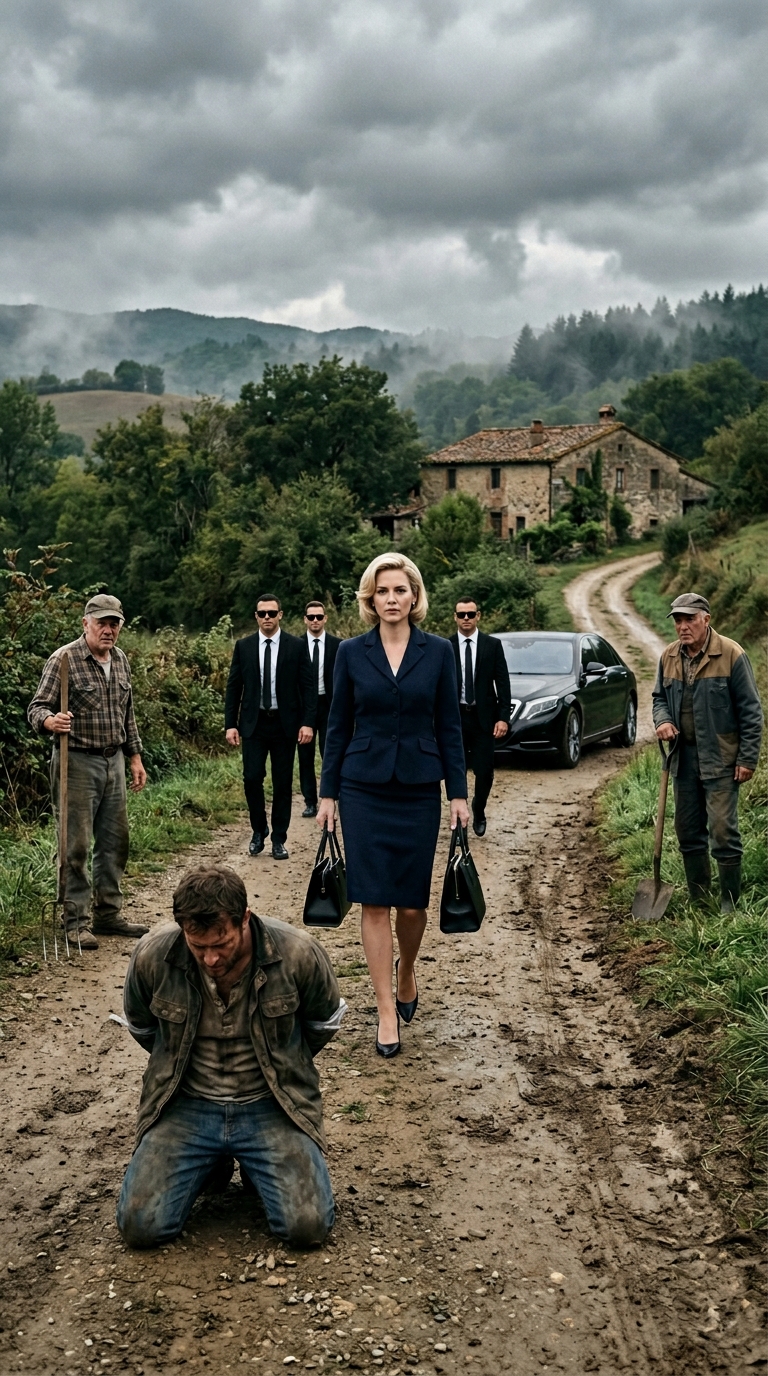
As they walked toward the door, applause began—first Jacques, then another, then more. Soon the courtyard filled with genuine, powerful applause.
They weren’t just celebrating a man saving his land.
They were celebrating the moment fear met its limit.
Before entering, Chloé turned back.
— Justice doesn’t end today. But from this morning on, one thing is certain: no one here will lower their eyes again.
No one laughed.
No one whispered.
Because everyone knew she spoke the truth.
And as the sun rose over Saint-Geniès, flooding the vineyards with light, the entire village understood that the humiliation of one innocent old man had awakened something that would never sleep again: the unshakable dignity of a people standing against injustice.
