

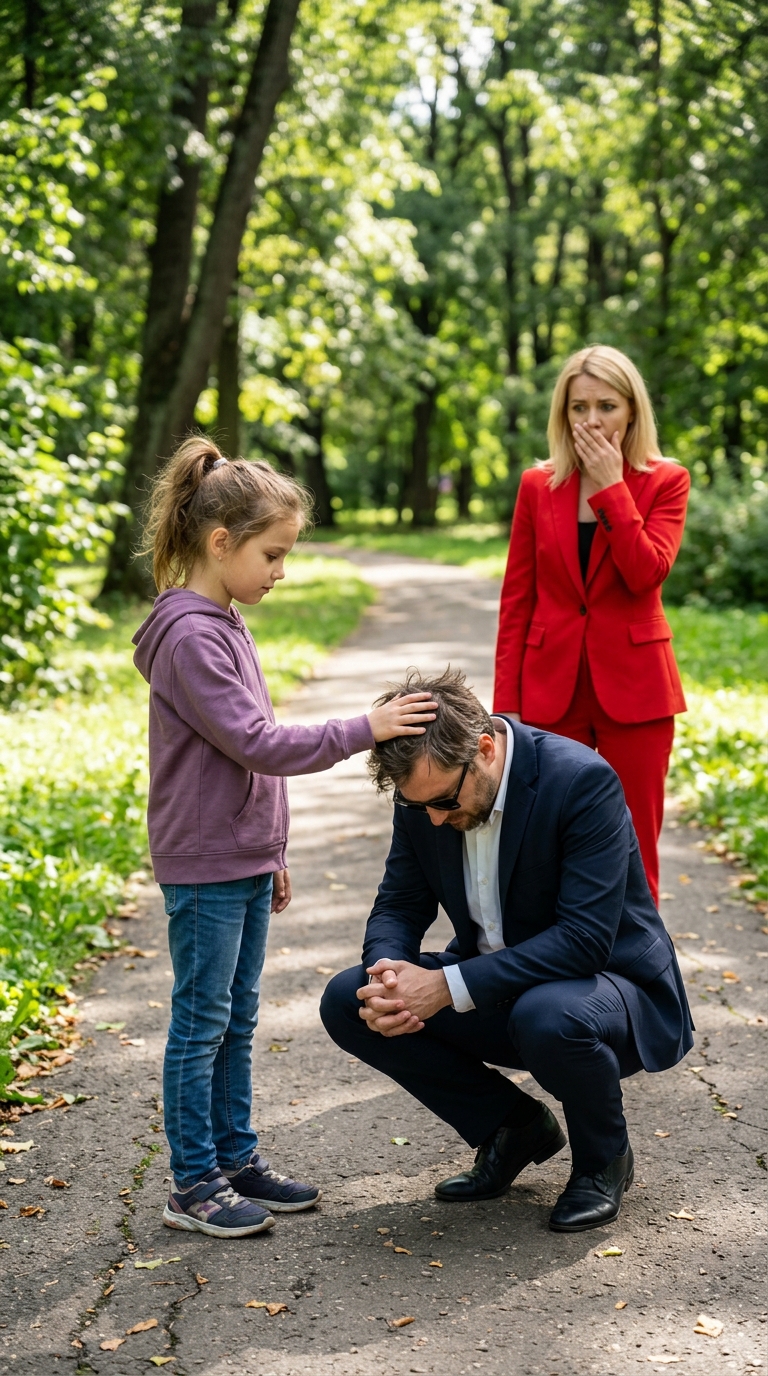
“You’re Not Going Blind—Your Wife Is Putting Something in Your Food,” the Homeless Girl Told the Rich Man
“He’s not blind… it’s his wife.”
Jonathan Hale walked slowly along the boardwalk of Cape Harbor, Florida, where the air carried the scent of salt and fried food, and tourists posed with souvenir drinks under the sun. He had lived there for nearly fifteen years, yet lately the world felt unfamiliar. First came the blurred edges. Then the fading colors. Then the fear of waking up and wondering how close the darkness was.
At his side, his wife Madeline Hale held his arm with practiced gentleness.
“Careful, honey,” she said softly. “I don’t want you to trip.”
Jonathan nodded behind his dark glasses. The doctors couldn’t explain it. Degeneration. Stress. Rare cases. Eye drops. Vitamins. Special diets. Madeline had slipped effortlessly into the role of devoted caretaker—tracking schedules, blending “special smoothies,” organizing pills into neat daily boxes.
And yet… something felt off. Like a fog had settled over his home—one no one else seemed to notice.
That morning, near the old gazebo, a small hand brushed his wrist.
Jonathan stopped.
The voice that spoke was young—but steady.
“You can still see a little, can’t you?”
He tried to focus. A small figure in a faded purple hoodie. Wide eyes. The kind of eyes that had learned too early not to trust the world.
Madeline stepped in immediately, her smile tight.
“I’m sorry, sweetheart. My husband is under medical care. Please don’t bother him.”
The girl didn’t move. She didn’t ask for money. Didn’t hold out her hand.
She looked straight at Jonathan.
“You’re not blind,” she whispered—so quietly only he could hear.
“It’s your wife. She’s putting something in your food.”
Jonathan’s heart slammed.
Madeline tugged at his arm. “Let’s go. Don’t listen. Kids like that make things up.”
But Jonathan didn’t move. Every instinct in him told him not to walk away.
The girl didn’t blink.
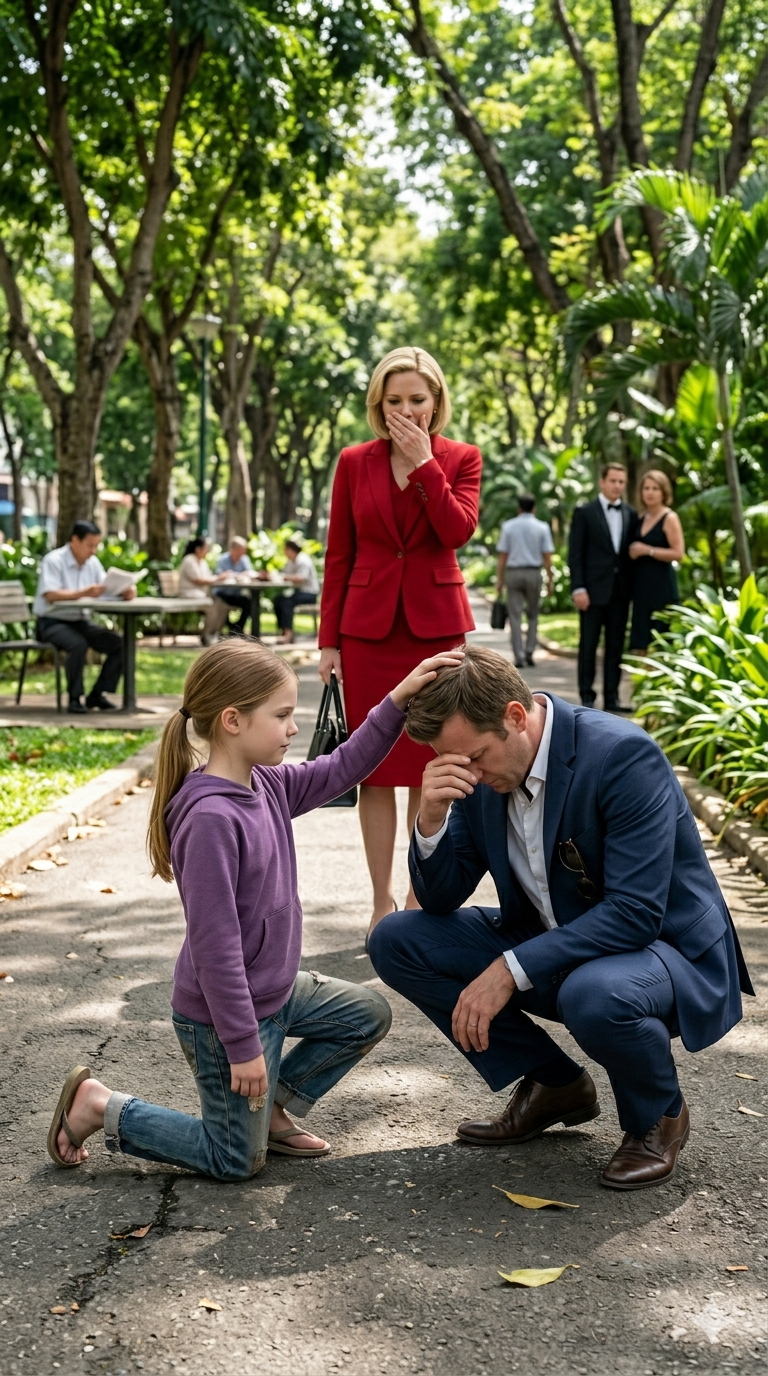
The First Test
That night, Jonathan sat at the long oak dining table as Madeline poured his green vitamin drink into a tall glass.
“It’s important for your recovery,” she said sweetly. “The doctor insists.”
Jonathan raised it to his lips—and for the first time, noticed the bitterness. He didn’t finish it.
“I’m not hungry,” he lied.
A flicker crossed Madeline’s face. Gone in an instant.
“You need to eat,” she insisted. “Otherwise you’ll get worse.”
That night, Jonathan woke up feeling… different.
He picked up the digital clock.
And read it.
Clear as day.
His breath caught.
The next morning, he pretended to drink the smoothie—then poured half of it into a fern when Madeline turned away.
By noon, the light didn’t hurt. Words in the newspaper sharpened into focus.
At the park, the girl appeared again, as if she had expected him.
“I knew you’d come back,” she said, sitting a careful distance away.
“You see better today, don’t you?”
Jonathan swallowed. “How do you know about the drinks?”
She shrugged. “I watch. Your wife goes to a pharmacy across the bridge. Pays cash. Never shops here where people know her.”
Cold crept up his spine.
“What’s your name?”
“Lily,” she said. “I used to come here with my parents… before I was alone.”
She didn’t cry. She spoke like someone who had already run out of tears.
“Why are you telling me this?” Jonathan asked.
“Because no one believed my dad when he said he felt strange,” she said quietly.
“And I won’t let it happen again.”
The Pattern
Jonathan discovered that Lily lived with her aunt Rosa, who worked long hours cleaning offices. Lily had learned to look after herself—and to notice the details others overlooked.
That evening, Madeline was unusually tense when Jonathan returned home.
“Where were you?” she asked, hugging him tightly. “Your eyes—how are they?”
“I think… I’m a little better today.”
Madeline stiffened for just a moment.
“That’s good,” she said quickly. “But don’t get your hopes up.”
“Which doctor said that?” Jonathan asked calmly.
She hesitated. “Dr. Collins.”
Jonathan didn’t recall any Dr. Collins.
Another lie.
Over the next few days, Jonathan stopped consuming anything Madeline prepared. His vision steadily improved.
Then Lily brought him something wrapped in plastic—an old voice recorder.
“My aunt gave it to me when my dad was sick,” she said. “In case doctors forgot what they said later.”
Jonathan stared at it.
“Sometimes,” Lily added, “you need proof.”
When Jonathan asked how her father died, she grew quiet.
“Car accident,” she said finally. “But before that… he was ‘sick.’ My mom wanted the insurance. When she realized he wouldn’t die fast enough… she made him drive.”
Jonathan felt a wave of nausea.
This wasn’t just about him.
It was a pattern.
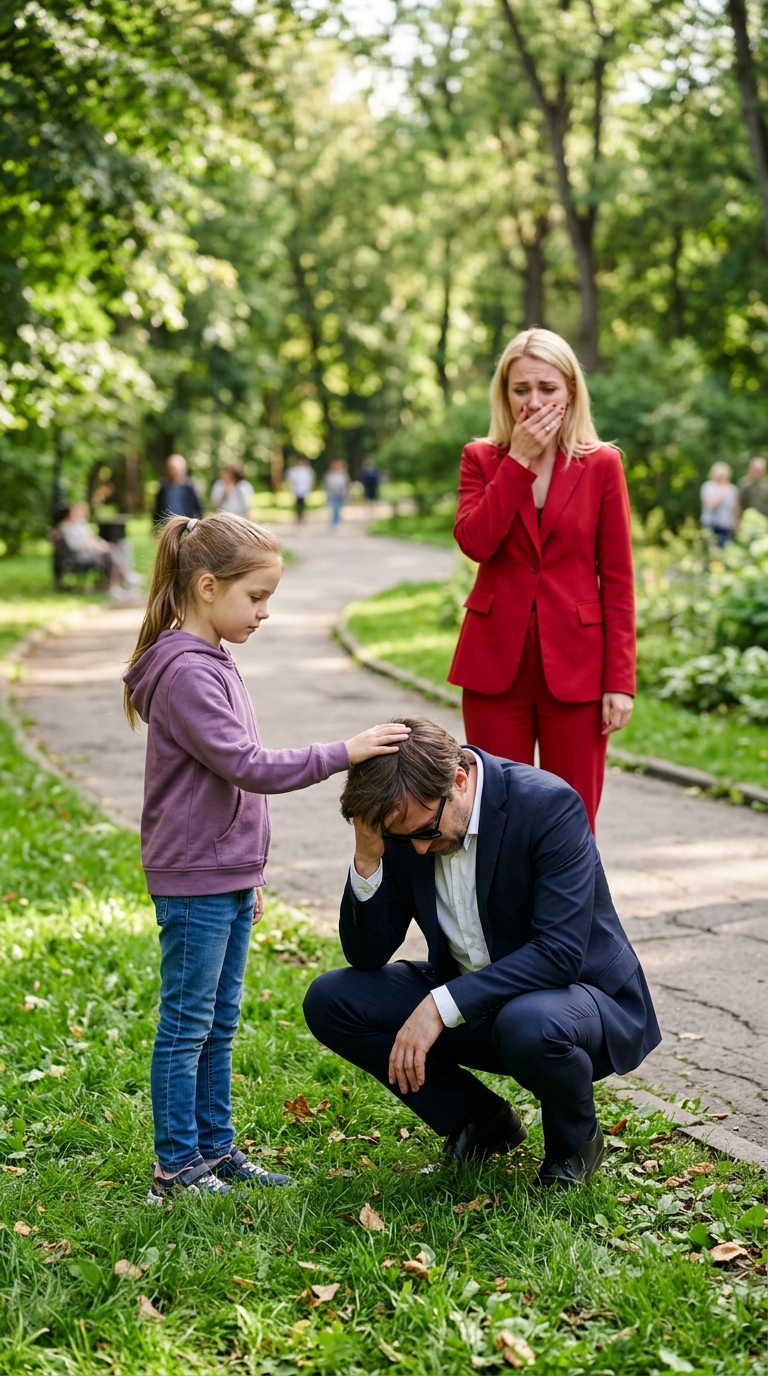
The Trap
Jonathan announced he would be leaving town for three days.
Madeline panicked.
“You can’t travel. Your treatment—”
“I’m flying. With my assistant.”
She pleaded. Argued. Cried. Tried to go with him.
Jonathan refused.
Instead, he stayed in a discreet hotel and watched.
A strange man visited the house. Well-dressed. Confident.
Jonathan followed him to a rundown medical office.
Dr. Mark Rivera – Integrative Medicine.
The name made Lily go pale.
“My mom used to mention him,” she whispered. “Before the accident.”
The pieces fell into place.
Jonathan acted quickly. He sent a sample of the “vitamin drink” to a private lab. Then invited Rivera over—pretending desperation.
Madeline was thrilled.
Rivera smiled like a businessman, not a doctor.
“We just need to adjust the dosage,” he said.
Madeline nodded eagerly. “I told him we could increase it.”
“Carefully,” Rivera replied. “We don’t want him gone too soon. Not yet.”
Jonathan’s blood ran cold.
“What’s the most important part?” he asked calmly.
Rivera leaned in, unaware the recorder was running.
“The power of attorney. Once he signs—and once he can’t see—no one questions anything.”
That’s when Jonathan stood up straight.
Removed his glasses.
And looked directly at his wife.
Agents entered the room.
Madeline collapsed.
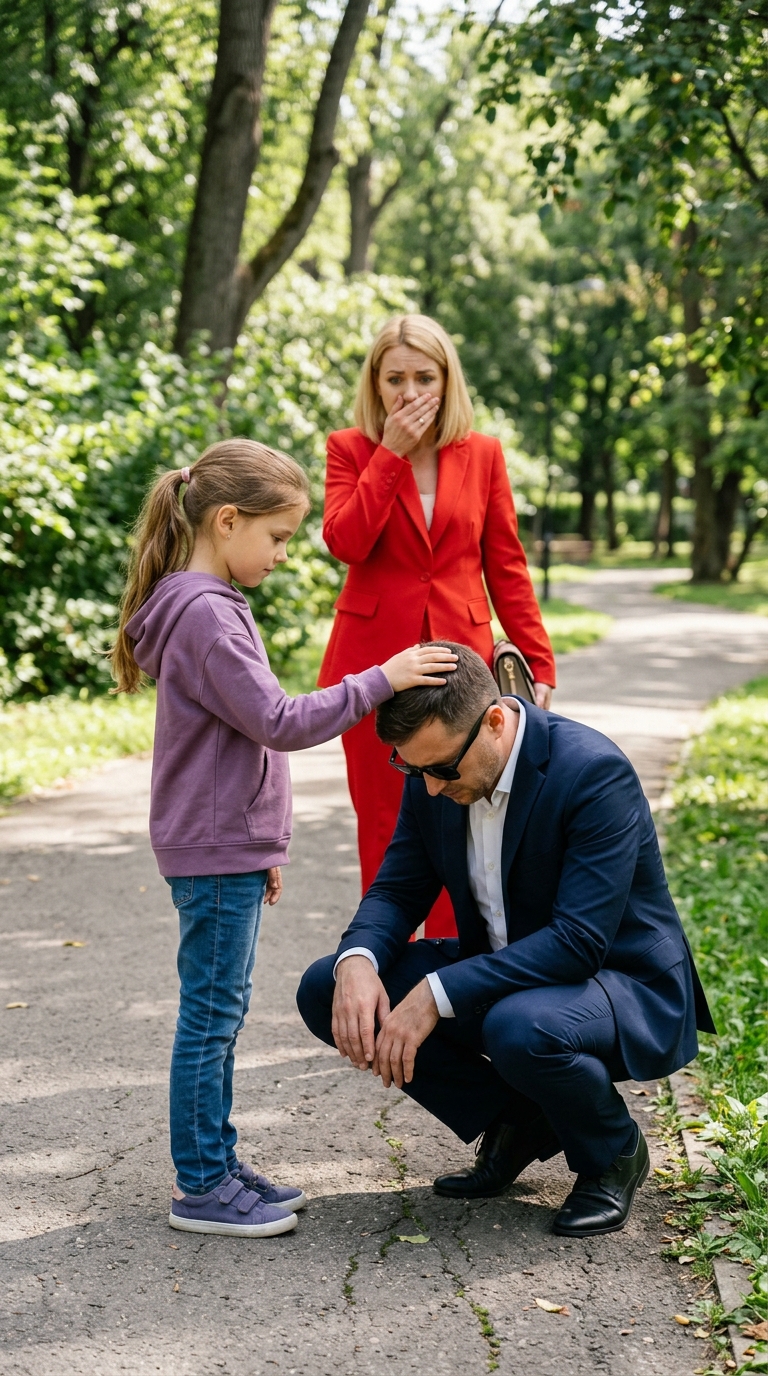
After the Darkness
The lab confirmed it: substances that had nothing to do with vitamins.
Rivera was arrested. Madeline was charged.
As they led Rivera away, he muttered something that made Lily tremble.
“That girl… again.”
Later, Jonathan sat with Lily at the park where it all began.
Her aunt had stable work now. Lily had a scholarship. Jonathan’s vision was returning—not by miracle, but by the absence of poison.
“Why did you help me?” Jonathan asked.
“Because someone should’ve helped my dad,” Lily said.
Jonathan looked out at the ocean, clearer than it had been in months.
“Sometimes,” he said softly, “children see what adults refuse to.”
Lily smiled—this time like a child who finally had the chance to be one.
And the darkness that nearly consumed Jonathan ended up revealing the brightest truth of all:
sometimes the smallest voice is the one that saves your life.
